Disclosure: This post may contain affiliate links. I may earn a small commission for my endorsement, recommendation, testimonial, and/or link to any products or services from this website.
Learn how to makeHomemade Pumpkin Puree!All you need are sugar pumpkins and a food processor to make a batch of 100% pureed pumpkin that’s richer, sweeter, and creamier than canned. Vegan, Gluten-Free, and Oil-Free.
This easy, 1-ingredient Pumpkin Pureerecipe turns roasted pie pumpkins into smooth and creamy pumpkin puree in no time. It’s so much more flavorful than what comes from a can and perfect for all of your favorite vegan pumpkin recipes, from baked goods to pasta sauces and more!
Table of Contents
- All About DIY Pumpkin Puree 🎃
- The Best Pumpkins for Pumpkin Puree
- How to Make Vegan Pumpkin Puree
- Ways to Use Pumpkin Puree
- How to Store Pumpkin PureeÂ
- Recipe FAQs
- Homemade Pumpkin Puree Recipe
All About DIY Pumpkin Puree 🎃
Pumpkin puree is a fall staple! I use it in a ton of recipes from September to December, like these Pumpkin Apple Muffins and this Creamy Pumpkin Vodka Sauce. And this Homemade Pumpkin Puree is my secret to making my vegan fall recipes taste 10x better.Â
While I don’t have anything against canned pumpkin puree, it’s often pretty flat in the flavor department because it’s made from steamed and pureed pumpkin. I opted to roast sugar pumpkins in this recipe to gently caramelize their natural sugars and create a richer, creamier texture. All these years later, and I still can’t get over how big a difference roasting makes.
This DIY guide walks you through the mostly hands-off method for making fresh pumpkin puree. Before you know it, you’ll have a batch of thick, velvety smooth puree to use right away or freeze before the holidays!
The Best Pumpkins for Pumpkin Puree
Small pie pumpkins (sometimes called sugar pumpkins) are the best for homemade pumpkin puree. They’re small, sweet, and have dark orange flesh. You should see them pop up at grocery stores and farmers’ markets from September through November.
You can also roast leftover uncarved carving pumpkins from Halloween, or even a Dickinson or Jarrahdale pumpkin, but the puree will not taste as sweet. I’d also suggest chopping them into smaller pieces to reduce the cooking time.Â
How to Make Vegan Pumpkin Puree

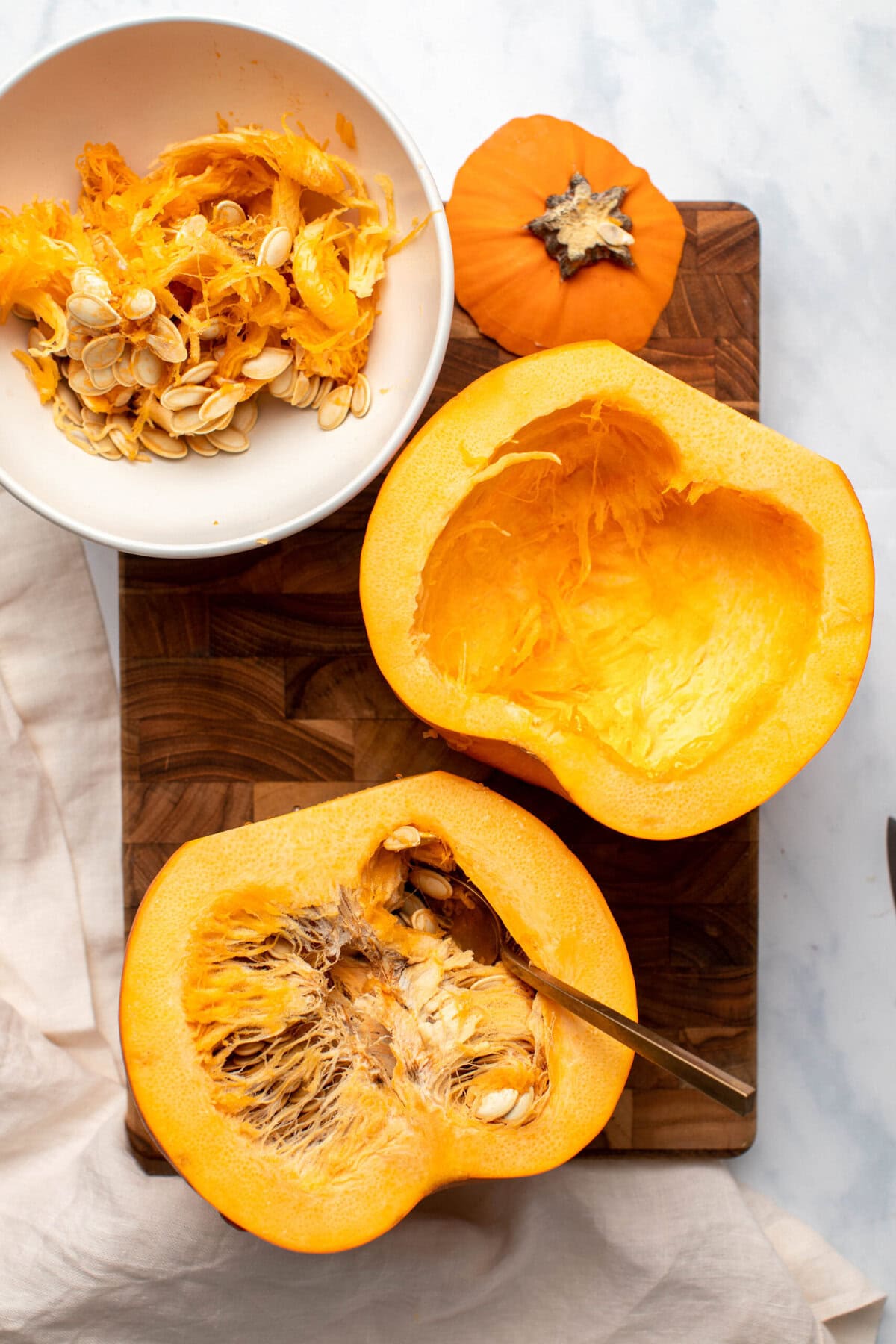
- Slice the top stem off each pumpkin, then cut it in half vertically. Scoop out the seeds and flesh with a spoon.
- Roast the pumpkin halves, cut-side down, until they’re very soft.
- Set them aside to cool, then scrape the softened flesh into a food processor.
- Process until you have a smooth puree. Use the pumpkin puree immediately or store it for later.
Caitlin’s Cooking Tips
- The roasting time will vary depending on the size of your pumpkins. Small pumpkins usually take around 30 minutes, while larger ones may take between 45 and 60 minutes. You’ll know they’re finished cooking when the flesh starts to pull away from the skin and a knife slides in like butter.
- If your puree looks a little watery, strain it through a piece of cheesecloth or a nut milk bag to separate the water from the flesh. If it’s too thick, blend in 1 teaspoon of water at a time until it becomes spreadable.
- To roast your saved pumpkin seeds, clean them well before tossing them in some olive oil and sea salt. Spread them on a baking sheet and roast at 300°F until they’re crunchy and golden.
Ways to Use Pumpkin Puree
You can use homemade pumpkin puree in any recipe that calls for canned pumpkin. Here are some of my favorite ways to use it:Â
There’s even more where that came from. Check out all the Vegan Pumpkin Recipes on my blog for more inspiration!
How to Store Pumpkin PureeÂ
Homemade pumpkin puree will keep for up to 1 week in the fridge. Store it in an airtight container to keep it fresh.
It also freezes well for up to 3 months. I like to freeze it in silicone ice cube trays or small stasher bags to make it easier to pop out as much pumpkin as I need for a smoothie or recipe without thawing the entire batch.
Before using the frozen puree, thaw it in the refrigerator overnight or in a bowl of lukewarm water to speed things up. It might separate after thawing, but a quick stir will help bring it back together.Â
Recipe FAQs
I used two 4-pound pie pumpkins and ended up with about 3 ¾ cups of puree. If you need more, simply roast more pumpkins.
Did you know that canned pumpkin is sometimes made from a blend of pumpkins and other winter squashes? If you can’t find enough pumpkins for a full batch of puree, feel free to combine them with roasted butternut, kabocha, honey nut, and/or acorn squash instead.
Sure. I’d recommend using a high-speed blender with a tamper to get that ultra-smooth consistency.
Enjoy! If you make this recipe and decide to share it on Facebook or Instagram, don’t forget to tag me @FromMyBowl + #FromMyBowl! I would also love it if you could leave a comment below with a recipe rating! Thank you for the support 😊
- 2 pie pumpkins or more/less as needed*
-
Prep:Preheat your oven to 400F and line a baking sheet with parchment paper.
-
Cut:Cut just under the top stem of each pumpkin to remove it. Flip the pumpkin onto the cut flat surface, then cut in half. Use a spoon to scoop out the seeds and stringy flesh part of each pumpkin; compost, discard, or save the seeds if you want to roast them!
-
Bake:Place the pumpkin halves cut-side down onto the baking sheet. Bake in the middle rack of the oven for 30-45 minutes, until the flesh pulls away from the skin and is easily pierced with a knife. Cook time will depend on pumpkin size.
-
Cool: Remove the baking tray from the oven and carefully flip the pumpkins to cut-side-up on the sheet. Let cool for 10 minutes before scooping their flesh into a food processor.
- Blend:Process for 2-3 minutes to form a smooth puree, scraping the sides of the container as necessary. See recipe notes if your puree is too thin or thick. (Note:Âif you do not have a food processor, this can also be done in a high-speed blender with a tamper).
-
Store:Use immediately, or transfer to an airtight container. Homemade pumpkin puree will keep in the fridge for up to 1 week, or in the freezer for up to 3 months.
- Pumpkins: I used two ~4 lb. pie pumpkins when photographing this recipe, which made 3 3/4 cups (31.7 oz / 900 g) of puree. You can easily increase or decrease the pumpkins used to get your desired volume of puree
- Puree Thickness: If your pumpkin puree is too thick and not blending, add water in 1 tablespoon increments, until a thick but smooth consistency is reached. If the puree is too thin, strain it through a cheesecloth to remove some extra liquid.
- Substitutions: Pie pumpkins have the sweetest flavor, but large edible carving pumpkins can also be used — I would suggest chopping them into smaller pieces to reduce cooking time in the oven. If you do not have access to pie pumpkins, this recipe will also work well with butternut squash, kabocha squash, or other hard-skin seeded squash varieties; adjust the cooking time and puree thickness as necessary.Â
Calories:236kcalCarbohydrates:59gProtein:9gFat:1gSaturated Fat:0.5gPolyunsaturated Fat:0.05gMonounsaturated Fat:0.1gSodium:9mgPotassium:3083mgFiber:5gSugar:25gVitamin A:77185IUVitamin C:82mgCalcium:190mgIron:7mg
PakarPBN
A Private Blog Network (PBN) is a collection of websites that are controlled by a single individual or organization and used primarily to build backlinks to a “money site” in order to influence its ranking in search engines such as Google. The core idea behind a PBN is based on the importance of backlinks in Google’s ranking algorithm. Since Google views backlinks as signals of authority and trust, some website owners attempt to artificially create these signals through a controlled network of sites.
In a typical PBN setup, the owner acquires expired or aged domains that already have existing authority, backlinks, and history. These domains are rebuilt with new content and hosted separately, often using different IP addresses, hosting providers, themes, and ownership details to make them appear unrelated. Within the content published on these sites, links are strategically placed that point to the main website the owner wants to rank higher. By doing this, the owner attempts to pass link equity (also known as “link juice”) from the PBN sites to the target website.
The purpose of a PBN is to give the impression that the target website is naturally earning links from multiple independent sources. If done effectively, this can temporarily improve keyword rankings, increase organic visibility, and drive more traffic from search results.